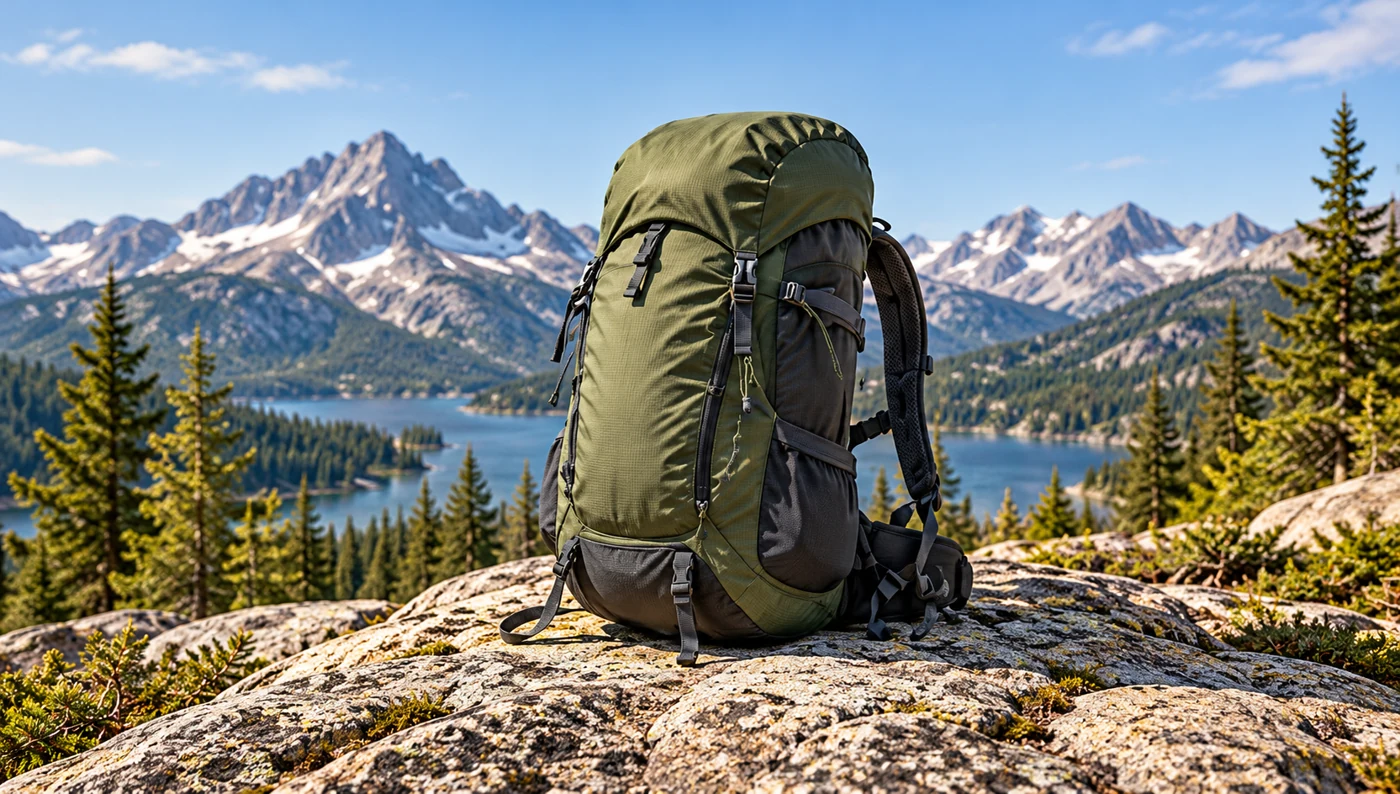
A useful daypack carries your actual kit comfortably and lets you reach what you need. Capacity is only a starting point. Build your comparison around a representative day’s load, then assess fit, organization and access before deciding which features deserve your budget.
Pack the kit before choosing the bag
Put your usual layers, water containers, food and essential systems in one place. Include the bulky items you genuinely need for the planned environment. A pack that only works after removing necessary equipment is the wrong reference point.
REI’s daypack advice emphasizes activity, carried equipment, body fit and personal preferences. Litres describe storage volume, not how a specific bottle, insulated layer or rigid item will sit inside. Take those awkward items with you when comparing packs.
Make fit the first comparison
Use the manufacturer’s sizing instructions, then try the pack with a realistic load. Adjust one part at a time so you can identify which change helps. Check shoulder contact, torso fit and whether the belt lands where the design intends.
Walk, reach and turn while wearing it. A few minutes can reveal an obvious mismatch, but cannot establish all-day comfort. If possible, repeat the comparison with your normal hiking clothing rather than choosing from an empty-pack impression.
Match construction to the load
| Pack approach | Useful for | Question to ask | Compromise |
|---|---|---|---|
| Simple lightweight | Compact loads and familiar day walks | Does my complete kit fit? | Less structure and organization |
| Support-focused | Larger loads or longer days | Does the loaded fit work for me? | Added weight and cost |
| Highly organized | Frequent access to small items | Will I use these pockets? | More zips and places to search |
Understand the numbers
Check whether a capacity figure includes external pockets, and compare weights for the same size or version. A recommended load range is a manufacturer’s guidance, not a universal comfort promise. Record the exact product number when models share a name.
Back length and body-height guidance are not interchangeable. A person’s torso proportions can differ from another person of the same height. Use the published measurements as a first filter, followed by a loaded fit check.
Budget for useful access
Before paying for extras, identify your three most frequent actions. You may need to reach water, add a layer and retrieve a map. Prefer a layout that supports those actions without emptying the pack.
If an existing pack fits your complete kit, use it for a local rehearsal. Your notes may point to a small organizational change instead of a new purchase. Avoid saving money by accepting a fit you already know is uncomfortable.
Final checks before buying
- Verify the size, version, recommended load and return conditions.
- Check that your bottles fit the pockets and remain reachable.
- Try the main opening with the pack loaded.
- Inspect how loose straps can be managed without interfering with access.
- Choose another design if the fit or capacity still fails after adjustment.
Sources & verification
Sources checked October 21, 2026. Specifications and general guidance can change; consult the current source for the exact product or destination.
- REI — How to Choose Daypacks
- National Park Service — Ten Essentials
- deuter — Speed Lite 21, product 3410225
Written with AI assistance. Original editorial explanations; no claimed personal field experience. Editorial policy · Suggest a correction